Independence Day Edition | Last updated: 6 August 2026
Indonesia turns 81 this 17 August, and there is no better way to understand the country than by eating your way across it. With more than 1,300 ethnic groups spread over 17,000 islands, no single dish speaks for all of it. A soup in Surabaya arrives jet black. A soup in Madura arrives clear and yellow. Both are called soto, and the distance between them tells you more about Indonesia than any map will.
This guide runs west to east, starting at the northern tip of Sumatra and finishing in the Baliem Valley in Papua, with a stop in Bali along the way. Some of these dishes you’ll find on any main road here. Others are worth planning a flight around. All of them come with a tip, because knowing how to order is half the experience.
Sumatra: Rendang, the dish that put Indonesian food on the world map.
Jakarta: Es teler, the country's youngest classic and its best hot-weather drink.
West Java: Sate maranggi, satay so well marinated it needs no sauce.
Yogyakarta: Gudeg, sweet jackfruit stew that fools everyone into thinking it's meat.
East Java: Rawon, the black soup that looks alarming and tastes mild.
Nusa Tenggara: Se'i sapi, cold-smoked beef that has quietly taken over Bali.
Kalimantan: Soto Banjar, chicken soup spiced closer to mulled wine than to Java.
Sulawesi: Coto Makassar, beef soup thickened with ground peanuts.
Papua: Papeda, the most unusual thing you will eat in this country.
Bali: Babi guling, if you get there before lunch sells out.
Already in Bali? Jump to where to find these on the island.
Why 17 August Tastes Like Tumpeng
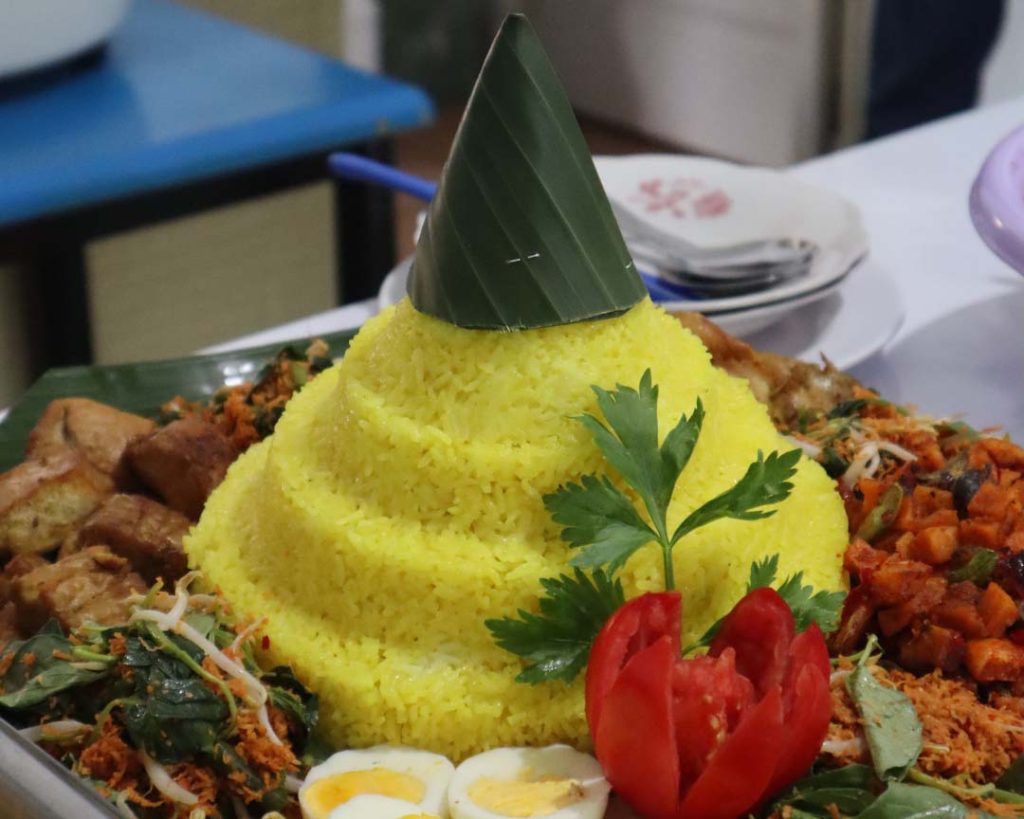
Independence Day in Indonesia is a street-level holiday. Neighbourhoods close their roads, run sack races and cracker-eating contests, and cook together.
The dish at the centre of it is tumpeng, a cone of yellow rice ringed by side dishes. The cone echoes the shape of a mountain, which Javanese tradition treats as sacred, and the tip gets cut and handed to the most respected person at the table. Everything around the base comes from wherever the cook is from, which is the whole idea. One shape, a different filling in every province.
That thinking runs through this entire list. Thirty-eight dishes and not one of them tastes like the others. Here is what is actually in them.
Sumatra's Best Dishes to Try:
Sumatra sits directly on the Indian Ocean trade route, with traders from India, Persia and the Arabian Peninsula landing here over centuries. Their spice cabinets stayed. This is the heaviest spicing in Indonesia and the closest thing the country has to curry.
Mie Aceh
Thick yellow noodles cooked in a rich, spiced broth, usually with beef, shrimp or crab. The spicing leans hard on cumin, cardamom and turmeric, a direct legacy of the traders who once passed through Aceh. It arrives closer to a curry than to any stir-fried noodle you’ve had before, and the province’s strong Islamic identity means you’ll almost never find pork anywhere near it.
Tip: Ask for kuah to get the full soup version. It’s the most flavourful of the three styles.
Resto Recommendation: Mie Aceh Dewi Sri
Ikan Arsik
A Batak dish of carp simmered in yellow spice paste until the sauce reduces down around the fish. The signature ingredient is andaliman, a local peppercorn that leaves a light numbness on the tongue, very close to what Sichuan pepper does. Sour, hot and bright, and completely unlike anything cooked in Java.
Tip: The tingling is the andaliman doing its job, not an allergic reaction.
Bika Ambon
A yellow cake with a honeycombed interior, and one of the great naming mysteries of Indonesian food. It comes from Medan in North Sumatra, roughly 2,500 kilometres from Ambon. Tapioca flour, coconut milk, eggs and fermented palm sap go in, and the yeast fermentation creates those vertical air channels and the moist, chewy bite it’s known for.
Tip: Eat it the same day. After two days it dries out and the honeycomb collapses.
Rendang
Beef slow-cooked in coconut milk and spice paste for four to eight hours, until the liquid evaporates completely and the meat absorbs every bit of it. What emerges from this long cooking is dark brown, nearly black, and it looks overcooked to anyone seeing it for the first time. It isn’t. That colour is the entire point, and it’s why the flavour runs as deep as it does.
Tip: Dark and dry is the real thing. Pale and saucy means you’ve been served kalio, an earlier stage of the same dish.
Nasi Padang
Sit down and a dozen small plates appear without you ordering anything. You pay only for what you touch. The food is served at room temperature, which throws visitors constantly, but it’s completely intentional and has been done this way for generations. Padang food has travelled further than any other regional cuisine in Indonesia, and you’ll find it on almost every main road in Bali.
Tip: Expect rendang, ayam pop, beef tendon curry, chilli egg and cassava leaves. Untouched plates go back, so only take what you actually want.
Sate Padang
Skewered beef or beef tongue under a thick yellow sauce catches a lot of people out. There’s no peanut in it. The sauce is rice flour and turmeric-based spices simmered down into something closer to a gravy, and it’s savoury, peppery and considerably richer than the satay most visitors arrive expecting.
Tip: Say daging if you want plain beef rather than tongue or intestine.
Pempek
A fish cake from Palembang made with ground mackerel blended into tapioca starch and deep-fried. The texture is springy and chewy rather than crisp, which is the part people don’t expect. It comes with cuko, a dark sauce of palm sugar, chilli and tamarind that lands sour, sweet and hot all in the same mouthful.
Tip: Start with kapal selam, the one with a whole egg sealed inside. Dip rather than pour, because cuko is stronger than it looks.
Martabak Manis
A thick, spongy pancake cooked in a shallow pan, split open, then loaded with butter, condensed milk and toppings before being folded shut and cut into squares. The batter is left to rise so the inside develops an open, honeycombed crumb. It shares a name with the savoury egg-filled martabak sold at the same carts, which causes endless confusion.
Tip: In Bali the carts appear on most main roads after sunset. Say martabak manis or terang bulan, or you’ll get the savoury one.
Jakarta's Best Dishes to Try:
Gado-Gado
Blanched vegetables, tofu, tempeh and egg under a thick peanut sauce. It gets called Indonesian salad, which is only half right, because the vegetables are cooked. The sauce is ground peanuts with palm sugar, garlic and tamarind, and it’s heavier and less sweet than the Thai satay sauce most people compare it to.
Tip: Say tanpa terasi to skip the shrimp paste and make it fully vegetarian.
Soto Betawi
Jakarta’s beef soup, built on coconut milk and dairy milk rather than a clear stock. It’s heavy in a way most Indonesian soups aren’t, and it comes with emping, a lightly bitter cracker made from melinjo nuts that cuts through the richness.
Tip: Order daging if you’d rather skip the tripe and lung that usually come as standard.
Es Teler
Iced avocado, jackfruit and young coconut in coconut milk and condensed milk. It was invented in Jakarta in the 1980s, making it one of the youngest dishes here by several centuries. The avocado is the part that surprises people, since it turns up as a sweet ingredient rather than a savoury one.
Tip: Ask for susu sedikit if you want it less sweet. The standard pour is generous.
West Java's Best Dishes to Try:
Empal Gentong
A beef and offal curry from Cirebon, cooked in a clay pot over a wood fire. The broth is yellow and coconut-based, with a faint smokiness that only comes from cooking it this way. It arrives topped with chives and dried chilli flakes.
Tip: The chilli comes dried on the side, so you set the heat level yourself.
Sate Maranggi
Satay where the meat is marinated in coriander, turmeric, ginger and palm sugar before it goes anywhere near the grill. Because the flavour is already inside the meat, it’s served without sauce. Sweet, savoury and lightly charred, and a good argument that satay didn’t need the peanut sauce in the first place.
Tip: Sold per skewer, and ten is a normal portion for one person.
Pepes
Fish, chicken or tofu coated in spice paste, wrapped in banana leaf, then steamed or grilled. The leaf traps the steam so the spices work all the way through, and the leaf’s own aroma passes into the food while it cooks. You’ll see it done a dozen different ways across Java.
Tip: Open the parcel and eat what’s inside. Pepes tahu is fully vegetarian.
Es Cendol
Green rice-flour jellies in coconut milk and palm sugar syrup, served cold. The green comes from pandan leaf rather than food colouring, and the worm-like shape puts people off before they’ve tasted it. Get past that and it’s one of the best things you can drink in Bali heat.
Tip: Stir it first, because the palm sugar settles at the bottom. It may appear as es dawet on menus.
Central Java and Yogyakarta's Best Dishes to Try:
Central Java cooks sweet, sometimes startlingly so. Palm sugar goes into savoury dishes here in quantities that surprise anyone arriving from Sumatra.
Gudeg
Young jackfruit stewed for hours with coconut milk, palm sugar and teak leaves until it turns deep reddish brown. It’s sweet, which already sets it apart from most Indonesian savoury cooking, and the soft stringy texture convinces nearly everyone that they’re eating meat. They aren’t. The jackfruit is entirely plant-based.
Tip: The gudeg is vegan but the standard plate adds egg, chicken and beef skin stew. Ask for gudeg only.
Lumpia Semarang
A fried roll filled with chopped bamboo shoots, egg and chicken or shrimp. It came directly out of the meeting between Chinese and Javanese kitchens in the 19th century, and the bamboo shoots give it a crunch and an aroma you won’t find in any other spring roll.
Tip: Bite the raw spring onion between mouthfuls. It’s on the plate to cut the richness.
Tempe Mendoan
Tempeh sliced wide and thin, dipped in seasoned batter, then fried only briefly. Mendoan literally means half-cooked. It comes out soft and floppy rather than crisp, and it’s eaten straight away with sweet soy sauce and chilli.
Tip: The floppiness is the dish, not a kitchen mistake. Eat it within minutes or it turns rubbery.
Klepon
Glutinous rice balls filled with liquid palm sugar and rolled in grated coconut. Bite into one and the filling bursts, which is the whole appeal and also the risk. Eat it whole in a single mouthful, because biting halfway means wearing it.
Tip: Sold at morning markets in boxes of ten, and usually gone by noon.
East Java and Madura's Best Dishes to Try:
East Java goes salty and heavy on the chilli, which is a noticeable gear change after Yogyakarta.
Rawon
A beef soup with a jet-black broth. The colour comes from kluwek, a fermented nut that tastes deep and earthy, somewhere between aged walnut and dark chocolate without any of the sweetness. It’s the most alarming-looking soup in Indonesia and one of the mildest on the tongue.
Tip: The raw bean sprouts on top go into the soup, not on the side.
Bakso Malang
Springy beef meatballs in a clear broth, and the Malang version comes stacked with fried wontons, stuffed tofu and noodles. The meatballs are denser and bouncier than European ones, which is a deliberate choice rather than a technical failure.
Tip: Season the bowl yourself with the sambal, sweet soy sauce and vinegar sitting on the table.
Soto Madura
A clear yellow chicken soup fragrant with turmeric, lemongrass and ginger, served with shredded chicken, boiled egg and bean sprouts. Squeeze the lime over it before you eat. Light, warming and the safest first soup for anyone still finding their footing with Indonesian food.
Tip: Specify ayam for chicken, since the beef version usually includes offal.
Kalimantan's Best Dishes to Try:
West Kalimantan has one of the largest Chinese Indonesian communities in the country, which is why several dishes here look closer to Chinese cooking than to anything else on this list.
Choipan
Steamed dumplings with a thin, near-translucent skin, filled with shredded jicama, garlic chives, or taro. They come topped with fried garlic and a sweet chilli dipping sauce. The recipe came from Hakka Chinese settlers, which is why they look and eat much like dim sum.
Tip: Also spelled chai kue on signs. The jicama filling is fully vegetarian.
Mie Tiaw Singkawang
Flat rice noodles stir-fried over a very high flame with beef, mustard greens, and bean sprouts. The heat leaves a faint smokiness on the noodles that is the whole point of the dish. Singkawang’s version is drier and less sweet than the kwetiau found elsewhere in Indonesia.
Tip: Ask for sapi to keep it beef, since some stalls also serve pork.
Bakmi Kepiting
Egg noodles topped with picked crab meat, served with a bowl of clear crab broth on the side. The noodles are dressed and eaten dry, and the broth is sipped between mouthfuls. Another dish from the Chinese communities of West Kalimantan.
Tip: Do not pour the broth over the noodles. They are meant to stay dry.
Soto Banjar
A chicken soup from the Banjar people, built on a broth spiced with cinnamon, cloves, star anise, and nutmeg. It is fragrant in a way that sits closer to a mulled spice than to the turmeric-forward sotos of Java. Served with shredded chicken, boiled egg, and perkedel potato fritters.
Tip: It comes with compressed rice cakes rather than plain rice. Try it before adding chilli, because the warm spice is the point.
Lempok Durian
Durian flesh cooked down with sugar until it thickens into a dense, chewy fudge. The long cooking mellows the fruit, so it tastes deep and caramel-like without the sharp aroma of the fresh version. Sold in wrapped logs and sliced into pieces.
Tip: The friendliest way to try durian. Most of the smell that puts people off is cooked out.
Sulawesi's Best Dishes to Try:
Ayam Woku Belanga
Chicken braised in a clay pot with an enormous volume of fresh aromatics. Lemongrass, turmeric leaf, kaffir lime, basil and chilli all go in whole rather than ground into a paste, which is why it tastes so green and alive. Manado cooking is the spiciest in the country, and this dish makes no attempt to hide it.
Tip: Ask for it less spicy when you order. The default level assumes you grew up here.
Coto Makassar
Beef soup with a cloudy broth that gets its body from ground peanuts and rice-washing water. It arrives with compressed rice cakes steamed in woven palm leaf, and the standard bowl includes offal alongside the beef.
Tip: Ask for meat only if offal isn’t for you. Nobody will blink.
Es Pisang Ijo
Banana wrapped in a soft green pandan rice-flour skin, then buried under coconut porridge, shaved ice, red syrup and condensed milk. It’s served in a bowl and eaten with a spoon, and it exists specifically to cool you down after a heavy Makassar meal.
Tip: Order it after the coto rather than alongside it. That’s how it’s meant to work.
Papua and Maluku's Best Dishes to Try:
This is where the assumptions break. Rice isn’t the staple across much of the east. Sago is. If you’ve only eaten in Java and Bali, you’ve had half of Indonesian food.
Papeda
Sago starch cooked with hot water into a clear, glue-like porridge. On its own it tastes of very nearly nothing, and that’s by design. The flavour comes from the yellow fish broth poured over the top, built on turmeric and tamarind. Locals lift it with two forked wooden sticks and slide it straight into the bowl in one motion.
Tip: Swallow rather than chew. Chewing turns papeda gummy and works against the entire texture.
Udang Selingkuh
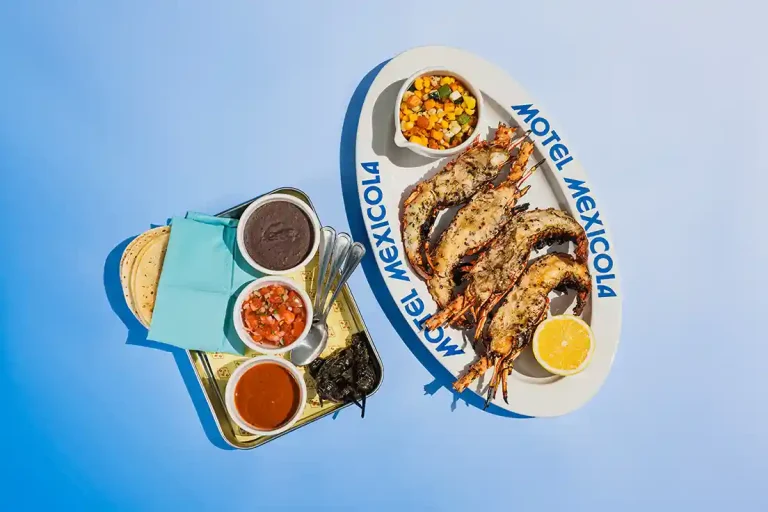
A freshwater prawn from the Baliem Valley with claws that belong on a crab. The name translates roughly to cheating prawn, a local joke about a prawn that appears to have strayed outside its own species. The meat is firm and noticeably sweeter than saltwater prawn.
Tip: Order it grilled. Butter and garlic versions are everywhere now, but they cover the flavour you came for.
Nusa Tenggara's Best Dishes to Try:
Se'i Sapi
Beef cold-smoked over kosambi wood for several hours, then sliced thin. The meat stays pink through the middle, which is the smoke rather than undercooking, and it comes with a sharp chilli and citrus relish specific to Timor. It has spread fast across Denpasar and Canggu in the past few years.
Tip: The pink ring is correct. Sending it back for more cooking only dries the meat out.
Sate Bulayak
Beef satay in a peanut sauce that runs thinner and hotter than the Javanese version. The side is the interesting part: a rice cake wrapped in a tight spiral of palm leaf, which is where the dish gets its name. Getting it open is a small rite of passage.
Tip: Unwrap it by turning, not pulling. The spiral comes away in one piece if you go the right way.
Bali's Best Dishes to Try:
Bali cooks differently from its neighbours because so much of the food starts as an offering. Dishes are made for a temple ceremony first and eaten afterwards. That’s why the island’s two most famous plates take a full day to prepare and sell out by early afternoon.
Babi Guling
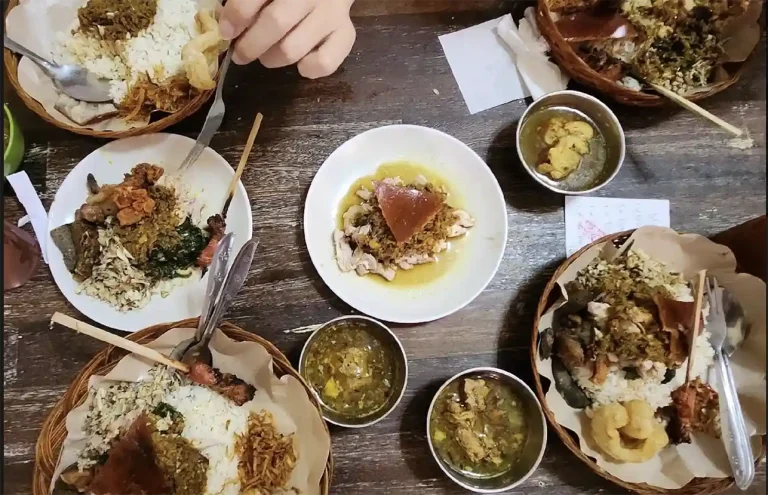
Whole suckling pig stuffed with Balinese spice paste, then spit-roasted over wood until the skin turns to proper crackling. A standard plate gives you crackling, roast meat, a spiced vegetable and coconut side, blood sausage and a bowl of clear broth. It’s the dish most visitors have heard about before they land.
Tip: Go at lunch. Most places roast one pig a day and close the moment it’s gone.
Ayam Betutu
Chicken packed inside and out with Balinese spice paste, wrapped in banana leaf, then slow-cooked for hours until it falls off the bone. The Gianyar version is milder and richer. The Gilimanuk version is significantly hotter, and locals will warn you about it with some enjoyment.
Tip: Call ahead at traditional places. Done properly it takes six to eight hours and is often made to order.
Laklak
Small green pancakes made from rice flour and coloured with pandan, cooked in a dimpled clay pan over coals. They’re served warm with grated coconut and palm sugar syrup, and they’re a proper Balinese market breakfast rather than something invented for visitors.
Tip: Buy before 9am at a traditional market. Vendors make a fixed batch and stop when it runs out.
Es Daluman
Green grass jelly set from the leaves of a climbing vine, served cold with coconut milk and palm sugar syrup. It looks heavy in the glass and drinks the opposite way, with a mild bitterness sitting under the sweetness.
Tip: Stir it before the first sip. The palm sugar sinks, and the top half tastes like plain coconut milk without it.
How To Eat Across Indonesia Without Leaving Bali
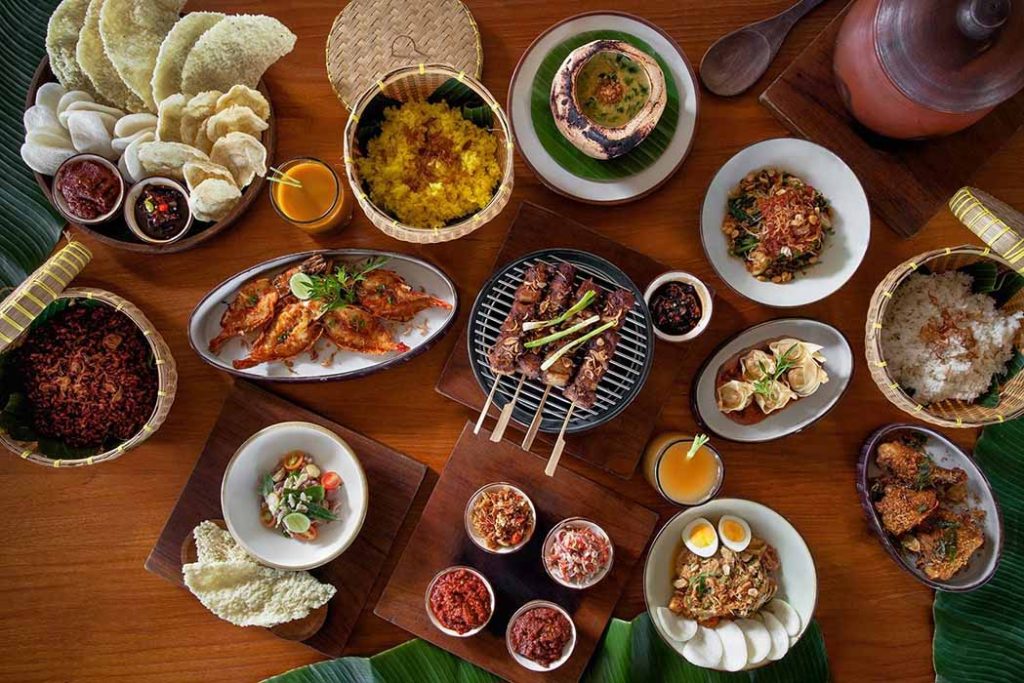
You don’t need 35 flights. Bali has absorbed cooks from nearly every province on this list, and the food arrived with the people who moved here.
Padang food sits on nearly every main road, easy to spot by the stacked window displays. Soto, rawon and bakso came with the large East Javanese population and concentrate around Denpasar, Kuta and Legian, where the best warungs in Kuta and Legian still cook them the way they’re cooked in Surabaya. Se’i sapi has spread quickly through Denpasar and Canggu in the past few years. Manado and Makassar kitchens cluster around Denpasar rather than the tourist strip, so you’ll need to go looking. Martabak, es teler and es cendol carts appear across the island after dark.
If you’d rather not chase one dish at a time, some kitchens here cook across several regions at once. Ulekan in Berawa and Munduk works through the archipelago rather than settling in one province, and Kaum at Potato Head does the same at the upscale end, with recipes pulled from communities across Indonesia. On the west coast, Seminyak’s Luxury Indonesian restaurants take the same approach further, treating regional recipes as the starting point for a full tasting menu rather than a single plate. For everything in between, we’ve rounded up six of the best Indonesian food spots in Bali.
For Balinese cooking specifically, the distance between a village kitchen and a restaurant one is worth understanding. Bali Asli in Amlapura cooks over wood in the traditional way and is the closest most visitors will get to how this food is actually made, though it’s a proper drive east. Closer in, babi guling is the dish everyone asks about and the one most likely to disappoint if you pick badly, so we’ve written up where to find the best babi guling in Bali separately.
The exceptions are the Papuan dishes. Papeda and udang selingkuh are hard to find outside eastern Indonesia, which is a good enough reason to keep travelling.
Before You Order
Spice level: Ask for it less spicy if you’re unsure. Kitchens will adjust without any fuss. Offal: Several soups include tripe, lung or intestine as standard. Requesting meat only is a normal order. Temperature: Padang and many warung dishes are served warm rather than hot. That’s intentional. Vegetarian: Shrimp paste hides in many sambals and sauces. Ask for it left out. Halal: Pork appears mainly in Balinese, Batak and Manadonese cooking. Everything else here is widely available halal.
Indonesia’s national motto translates to unity in diversity. It’s usually printed under a coat of arms, but it’s a lot easier to taste. A black soup in Surabaya and a clear one in Madura. Rice in Java and sago in Papua. Sugar in Yogyakarta and raw chilli in Manado. Nobody ever agreed on any of it, and nobody needed to. Pick one dish from a region you’ve never visited this 17 August, and you’ve got the whole holiday in a single bowl.
Selamat Hari Kemerdekaan.
FAQs
Indonesia named six national dishes in 2018: rendang, nasi goreng, sate, soto, gado-gado and tumpeng. Rendang is the most internationally known of the six, and the one most visitors try first.
No. Plenty of the best known dishes are mild, including rawon, gudeg, ayam pop and soto Madura. Heat usually sits in a sambal served on the side, which puts you in control of it.
Soto Madura or bakso. Both are clear, mild and familiar in structure, and they give you a baseline before moving on to heavier dishes like rendang or coto Makassar.
Most of them. Padang food, soto, rawon, bakso, se'i sapi, martabak and es cendol are all widely available across the island. Manado and Makassar cooking is here too, mostly around Denpasar rather than the tourist areas.
It can be, with one thing to watch. Tempeh, tofu, gado-gado, pepes tahu and gudeg are all plant-based, but shrimp paste turns up in many sauces and sambals. Ask for it without shrimp paste when you order.
Papeda from Papua and Maluku. It's a nearly flavourless sago porridge with a glue-like texture, eaten by swallowing rather than chewing, and it looks like nothing else in the archipelago.
Tumpeng, a cone of yellow rice surrounded by side dishes. Neighbourhoods cook it together on 17 August alongside street games and races, and the tip of the cone is cut and given to the most respected person present.
Es cendol and es teler are the two to know. Cendol is green rice-flour jellies in coconut milk and palm sugar, and es teler mixes avocado, jackfruit and young coconut. Klepon and martabak manis are the sweets worth chasing.
Rendang and ayam betutu, both at six to eight hours. Gudeg also cooks for hours. If a restaurant serves any of these quickly, it's usually a sign the recipe has been shortened.
Generally yes, with the usual approach. Choose stalls with a queue and high turnover, look for food cooked in front of you, and stick to bottled or boiled drinks. Busy warungs are often the better bet over quiet ones.